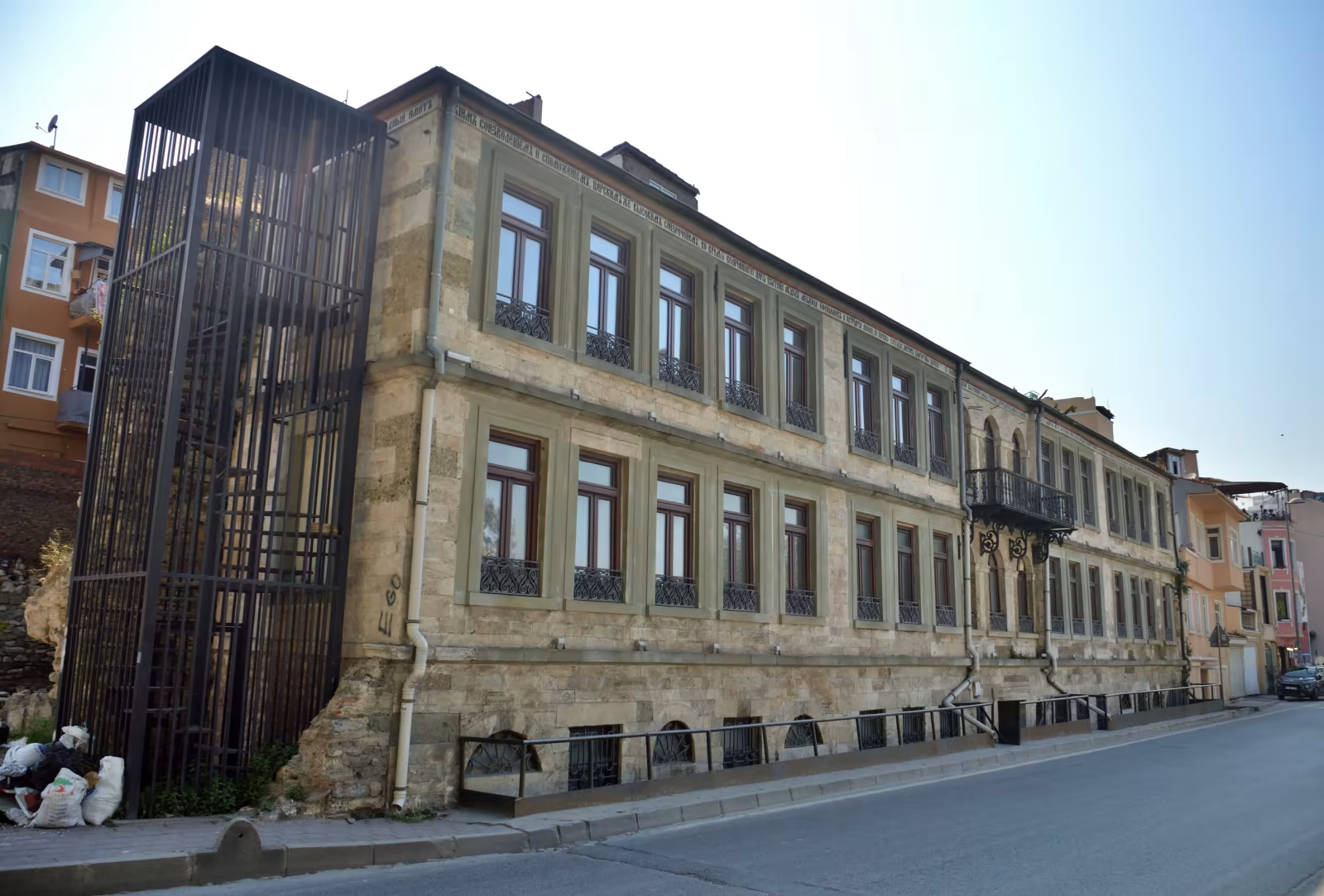
The Bulgarian Exarchate was the official name of the Bulgarian Orthodox Church before its autocephaly was recognized by the Ecumenical See in 1945 and the Bulgarian Patriarchate was restored in 1953. Just as the residence of the Greek patriarch was called a patriarchate, the seat of the Bulgarian spiritual leader in Istanbul's Phanar district was called the Exarchate.
The roots of the institution date back to the struggles initiated by Bulgarians in the 1840s to break away from the dominance of the Rum Millet. Established in Istanbul, where approximately 30,000 Bulgarian-origin Ottoman citizens lived, the Exarchate was officially founded by the imperial firman issued by Sultan Abdulaziz on 28 February 1870. This firman served as the first official document demonstrating that the Bulgarian nation possessed a separate existence.
In 1872, the Bulgarian Exarchate severed its ties with the Greek Orthodox Patriarchate. On 23 May of the same year, at the Bulgarian St. Stephen Church in Istanbul—which had been closed by the Ecumenical Patriarch's order—Antim I and other Bulgarian hierarchs celebrated a liturgy and declared the autocephaly of the Bulgarian Church. In response, the Patriarchal Synod deposed Antim I and excommunicated the others.
Following Bulgaria's declaration of independence in 1908, the relocation of the Exarchate became a subject of discussion. In 1913, after the Balkan Wars and under the tenure of Exarch Joseph I, the headquarters were moved to Sofia, and the institution in Istanbul was converted into the "Exarchate Vicariate." With the subordination of the Exarchate Vicariate to the Patriarchate in 1945, the activities of the Istanbul Exarchate came to an end.
Recorded as a public building in Fatih, the Exarchate represents a major turning point in terms of the millet system and administrative organization within the Ottoman Empire. Article X of the firman, while outlining the borders of the Bulgarian Exarchate, essentially drew the borders of the Bulgarian nation itself.
The Exarchate building and the administrative structures developing around it witnessed the political tensions of the period. Interventions by Ottoman statesmen and foreign diplomats, particularly the influential Russian ambassador Nikolay Pavlovich Ignatyev, directly affected the balances surrounding the institution. Exiles, protests, and diplomatic correspondence formed an integral part of daily life around this building.
Today, located within the boundaries of Fatih, this historical site remains recorded as an important symbol of Istanbul's multi-layered religious and administrative past. For visitors and researchers, the structure stands as a tangible witness to 19th-century nationalist currents and Ottoman administrative reforms.
Wikimedia research dossier · Last checked: 2026-09-23 12:49:50


